

What is E-invoicing
E-invoicing FAQs
1. What is e-invoicing?
E-Invoicing means issuing invoices electronically in a standard digital format that’s sent automatically between the seller, buyer, and the Tax Authority for validation, replacing paper or PDF invoices.
Is this information helpful?
2. What is the difference between paper invoices and e-invoices?
Paper invoices are issued manually and require signatures and stamps. E-invoices are issued digitally, are electronically certified, and carry a unique verification code.
Also, the e-invoices are issued and sent to the buyer and the Tax Authority instantly. They are stored electronically with instant verification and reporting, which is ensuring speed, accuracy, and security.
Is this information helpful?
3. What is the main objective of e-invoicing?
The main objective of e-invoicing is to improve business transaction efficiency, ensure transparency and tax compliance, as well as prevent fraudulent invoices.
Is this information helpful?
4. What are the direct benefits for companies?
Direct benefits for companies include reduced operating costs, simplified auditing, improved data accuracy and inventory management, reduced errors, integration with company systems, secure archiving, and real-time reporting for better decision-making.
Is this information helpful?
5.How should I determine whether I am required to implement e-invoicing from 1 April 2027?
The key reference for determining your implementation phase is the total value of your annual supplies as of 31 March 2027.
This applies to both resident and non-resident taxpayers. For non-resident taxpayers, the calculation shall be based on supplies made in the Sultanate of Oman only.
For VAT Groups, the threshold is assessed at group level and not on a per-member basis.
When calculating the value of your annual supplies, you must include:
•The value of your taxable supplies, excluding supplies of capital assets;
•The value of goods and services subject to the Reverse Charge Mechanism; and
•The value of your intra-GCC supplies of goods and services.
You are required to implement e-invoicing from 1 April 2027 if either of the following is met:
•The total value of your supplies from April 2026 to 31 March 2027 exceeds OMR 5,000,000; or
•The total value of your supplies expected to be achieved from 1 April 2027 to 31 March 2028 exceeds OMR 5,000,000.
If neither is met, you are required to implement e-invoicing from 1 October 2027.
Is this information helpful?
6. Will SMEs be included?
Yes, within the third phase of the project. Can a company not targeted in the first phase applies the system voluntarily? Yes, optional early adoption is allowed with necessary support provided.
Is this information helpful?
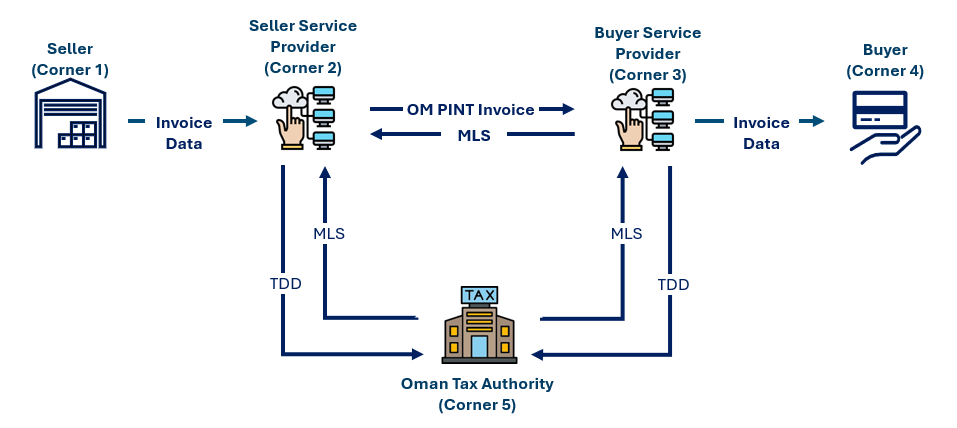
7. How is an e-invoice issued?
Invoices are issued through an electronic operating model linking taxpayers, service providers, tax system, and recipients to ensure secure and standardized issuance.
1. (Supplier)
2. (Supplier’s Service Provider)
3. (Buyer’s Service Provider)
4. (Buyer)
5. (Oman Tax Authority – OTA)
Is this information helpful?

Fawtara FAQ
PDF file
